Stop Wasting Time on DIY PPC Management: Try These 7 Quick Hacks for Local Growth
implementation of advanced conversion tracking architecture
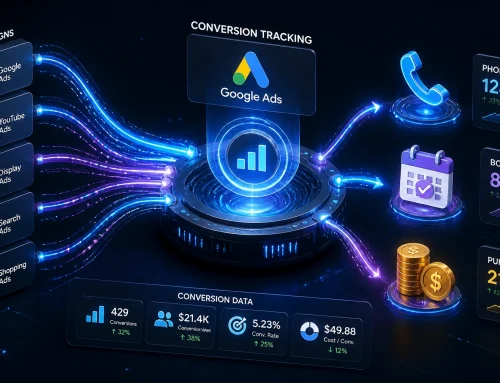
The fundamental prerequisite for any successful google ads management strategy is the establishment of a robust conversion tracking framework. Without a precise mechanism to quantify the efficacy of specific ad interactions, the allocation of capital remains speculative rather than data-driven. Small business owners often neglect the integration of secondary conversion actions, which results in a fragmented understanding of the customer journey.

A comprehensive tracking environment must include the deployment of the Google Tag across all web properties and the configuration of specific event triggers for form completions, click-to-call interactions, and third-party booking integrations.
- Utilize the Google Ads conversion tag over imported Google Analytics goals to ensure lower latency in data reporting.
- Assign distinct monetary values to each conversion action to facilitate value-based bidding strategies.
- Implement enhanced conversions to recover lost data attributable to browser privacy restrictions and cookie depletion.
- Conduct weekly audits of the "Status" column within the conversions interface to identify and rectify tracking discrepancies.
By centralizing these data points, ppc management transitions from a manual overhead task into an automated engine for ROI growth. The utilization of UTM parameters remains critical for cross-channel attribution, ensuring that the source of every lead is transparently documented within the CRM system.
optimization of geographic targeting and presence settings
Local growth for service-based businesses and real estate professionals is frequently impeded by inefficient geographic configurations. The default settings within the Google Ads interface often favor broad reach over precision, leading to budget exhaustion on users who are outside the viable service area. It is observed that the "Presence or interest" setting frequently captures traffic from users who are merely researching a location rather than physically situated within it.

The transition to a "Presence" only setting ensures that impressions are restricted to individuals physically located within the defined radii or zip codes.
- Segment campaigns by high-performing suburbs or postal codes to allow for granular budget control.
- Apply location bid adjustments based on historical performance data found in the geographic report.
- Utilize radius targeting around physical office locations to capture high-intent "near me" search volume.
- Exclude low-performing or irrelevant municipalities that consistently yield high cost-per-lead metrics.
For a google ads agency, the management of these spatial variables is a continuous process of refinement. When a specific territory demonstrates a higher conversion rate, the reallocation of resources to that specific locale is executed to maximize the aggregate return on ad spend. Further insights into localized performance can be examined through our case studies, which illustrate the impact of geographic precision on lead volume.
systematic application of negative keyword filtration
The erosion of profitability in google ads for small business is most commonly attributed to the inclusion of irrelevant search queries. While broad match and phrase match types are utilized to capture a wide array of potential leads, they simultaneously expose the account to "vampire" keywords that deplete the daily budget without generating commercial value. The maintenance of an exhaustive negative keyword list is therefore a non-negotiable component of professional ppc management.

An effective filtration system operates at both the account and campaign levels to prevent the appearance of ads for queries containing terms such as "free," "jobs," "salary," or "DIY."
- Review the Search Terms report at 72-hour intervals to identify and exclude non-converting queries.
- Create shared negative keyword lists to streamline the exclusion process across multiple campaigns.
- Analyze "n-grams" to identify recurring words or phrases within unsuccessful search queries.
- Proactively exclude competitor brand names if the strategic objective is strictly lead generation rather than brand conquesting.
The objective of this systematic exclusion is to increase the concentration of high-intent traffic reaching the landing page. By refining the search term pool, the click-through rate is improved, which positively influences the Quality Score and subsequently reduces the cost-per-click. This technical discipline is a hallmark of the 15+ years of experience provided by Envision Clicks.
strategic qualification through ad copy linguistics
The primary function of ad copy is not merely to attract clicks but to act as a primary filter for lead quality. In the context of local business growth, receiving a high volume of unqualified inquiries can overwhelm internal sales teams and distort ROI calculations. Ad copy should be structured to explicitly define the service boundaries, price points, and target demographics before the user initiates a paid click.
Incorporating specific qualifying criteria within the headlines and descriptions serves to discourage users who are unlikely to convert into paying customers.
- Include "Starting at" pricing to filter for budget-conscious consumers who may not meet the business's minimum project requirements.
- Mention specific service areas in Headline 1 to reassure local users of the business's relevance.
- Utilize Dynamic Keyword Insertion (DKI) with caution to maintain high relevance while ensuring the messaging remains professional.
- Feature strong calls-to-action (CTAs) that specify the next step, such as "Request a Professional Quote" or "Schedule an On-Site Consultation."
Passive voice is often employed in the technical evaluation of ad copy performance to maintain objectivity. When the copy is refined to be more exclusionary, the total number of clicks may decrease, yet the conversion rate typically experiences a commensurate increase. This transition from quantity to quality is essential for sustainable growth in the competitive landscape of google ads management.
enhancement of landing page congruency and performance
A significant portion of wasted ad spend occurs after the click has been processed, primarily due to a lack of alignment between the advertisement and the destination URL. High bounce rates are indicative of a failure to meet user expectations or a deficiency in the technical performance of the landing page. For local service providers, the mobile experience is the most critical factor, as a majority of high-intent searches occur on handheld devices.

Ensuring that the landing page content mirrors the promises made in the ad copy is essential for maintaining a high Quality Score and improving conversion outcomes.
- Minimize page load times to under 2.5 seconds to prevent user abandonment.
- Place a click-to-call button and a lead capture form prominently above the fold on all device types.
- Incorporate local trust signals, such as verified reviews and location-specific imagery, to build immediate credibility.
- Utilize dedicated landing pages for each service category rather than directing all traffic to the homepage.
The implementation of these structural improvements results in a more streamlined user journey. When the landing page is optimized for conversion, the effective cost-per-lead is reduced, allowing for the scaling of campaign budgets. For further information on digital marketing strategies, readers are encouraged to consult the Envision Clicks blog.
utilization of automated bidding with target guardrails
The evolution of machine learning within the Google Ads ecosystem has made automated bidding a standard practice for professional google ads agencies. However, the deployment of these algorithms without appropriate constraints can lead to volatile spending patterns and suboptimal ROI. The transition from manual bidding to "Maximize Conversions" or "Target CPA" (tCPA) must be managed with a data-centric approach.
Automated bidding strategies require a minimum threshold of historical conversion data to function effectively, typically recommended at 30 conversions within a 30-day window.
- Set a Target CPA that is slightly above the historical average to allow the algorithm room for exploration.
- Use seasonality adjustments during peak periods to inform the bidding engine of anticipated fluctuations in traffic.
- Monitor the "Bid Strategy Status" to identify if the campaign is limited by budget or if the target is too restrictive.
- Implement Portfolio Bid Strategies for accounts with multiple campaigns sharing similar objectives and budgets.
The technical management of these automated systems involves continuous monitoring of the "Signals" report to understand which factors are driving performance. By providing the algorithm with high-quality data through refined conversion tracking, the efficiency of the bidding process is significantly enhanced.
deployment of performance max with brand exclusions
Performance Max (PMax) represents the latest advancement in cross-channel automation, integrating Search, Display, YouTube, and Discovery into a single campaign structure. While powerful, PMax can frequently cannibalize branded search traffic or waste budget on low-quality display placements if not properly configured. For local businesses, PMax should be viewed as a supplementary tool rather than a replacement for core search campaigns.
The successful integration of Performance Max requires the application of specific guardrails to ensure that the spend is directed toward new customer acquisition rather than existing brand equity.
- Apply brand exclusions to prevent PMax from bidding on the business's own name, which should be handled by a dedicated brand campaign.
- Upload customer lists to the "Audience Signals" section to provide the algorithm with a baseline for ideal lead profiles.
- Regularly audit the "Placement" report to exclude mobile applications and low-quality websites that generate accidental clicks.
- Use high-quality creative assets, including video and high-resolution imagery, to prevent the system from auto-generating poor-quality ads.
By treating PMax as a tool for incremental growth, it is possible to uncover new lead sources that traditional search campaigns might overlook. The 15+ years of experience at Envision Clicks ensures that these complex campaign types are managed with the transparency and precision required for local business success.
2026-05-26
Share This Article:
Related Posts:
- Understanding Google Ads Quality Score for Local Businesses
- The Importance of Negative Keywords in PPC Management
- Why Your Small Business Needs Professional Google Ads Management
- How to Track Offline Conversions in Google Ads
{“@type”:”BlogPosting”,”image”:”https://cdn.marblism.com/60pX1FuEDBV.webp”,”author”:{“name”:”Envision Clicks”,”@type”:”Organization”},”@context”:”https://schema.org”,”headline”:”Stop Wasting Time on DIY PPC Management: Try These 7 Quick Hacks for Local Growth”,”publisher”:{“logo”:{“url”:”https://www.envisionclicks.com/logo.png”,”@type”:”ImageObject”},”name”:”Envision Clicks”,”@type”:”Organization”},”articleBody”:”The fundamental prerequisite for any successful google ads management strategy is the establishment of a robust conversion tracking framework. Without a precise mechanism to quantify the efficacy of specific ad interactions, the allocation of capital remains speculative rather than data-driven. Small business owners often neglect the integration of secondary conversion actions, which results in a fragmented understanding of the customer journey. A comprehensive tracking environment must include the deployment of the Google Tag across all web properties and the configuration of specific event triggers for form completions, click-to-call interactions, and third-party booking integrations. Local growth for service-based businesses and real estate professionals is frequently impeded by inefficient geographic configurations. The default settings within the Google Ads interface often favor broad reach over precision, leading to budget exhaustion on users who are outside the viable service area. The erosion of profitability in google ads for small business is most commonly attributed to the inclusion of irrelevant search queries. While broad match and phrase match types are utilized to capture a wide array of potential leads, they simultaneously expose the account to ‘vampire’ keywords that deplete the daily budget without generating commercial value.”,”description”:”Discover 7 technical hacks for optimizing Google Ads for local businesses. Learn about conversion tracking, geographic targeting, and negative keyword filtration to boost ROI.”,”datePublished”:”2026-05-26″}