Google Ads Optimization Secrets Revealed: What Experts Don't Want You to Know
The landscape of digital advertising is characterized by a high degree of volatility where the mechanisms of the Google Ads platform undergo frequent transformations, often leaving local business owners and real estate professionals struggling to maintain a profitable return on investment. While many perceive the platform as a simple auction system, the reality involves a multifaceted interplay of algorithmic preferences, user intent signals, and historical performance data that dictates the visibility and cost-efficiency of every campaign. Success in google ads management is not merely a function of total expenditure but is rather predicated upon the strategic application of advanced optimization techniques that are frequently obscured by the platform’s default settings and simplified recommendations. To achieve sustained growth and minimize waste, advertisers must look beyond the superficial metrics and implement a rigorous framework designed to exploit the nuances of the auction environment.
audience targeting precision
The foundation of a high-performing campaign rests upon the precision with which audience segments are identified and targeted. Traditional keyword-based targeting is often insufficient for modern ppc management because it fails to account for the granular behavioral nuances of the searcher. Advanced practitioners utilize Single Keyword Ad Groups (SKAGs) to ensure that the relationship between the search query, the ad creative, and the landing page is as tight as possible. By isolating keywords into individual groups, one can achieve a Quality Score that is significantly higher than the industry average, thereby reducing the actual cost-per-click while maintaining a superior position on the search engine results page. This level of granularity allows for the creation of hyper-relevant ad copy that speaks directly to the searcher's specific pain points, a necessity for google ads for small business where every dollar of the budget must be defended.

Beyond basic keyword matching, the layering of audiences provides an additional dimension of control that protects the budget from low-intent traffic. Custom Intent Audiences enable advertisers to reach users who have recently searched for competitor terms or navigated through specific industry-related domains. For real estate professionals, this means targeting individuals who are actively researching mortgage calculators or property valuation tools rather than just those typing generic search terms. Furthermore, Customer Match functionality allows for the uploading of existing lead lists to the Google ecosystem, enabling the system to serve tailored advertisements to past clients or to build lookalike audiences based on the characteristics of high-value converters. The integration of these audience signals creates a sophisticated filtering mechanism that ensures ad spend is concentrated on the users most likely to generate a conversion.
- Use Single Keyword Ad Groups to maximize Quality Score and relevance
- Implement Custom Intent Audiences based on competitor search terms and URLs
- Upload first-party data through Customer Match to leverage historical lead information
- Adjust bids based on In-Market audience segments to prioritize high-intent users
- Add competitor websites as audience signals within Performance Max campaigns
ai-driven automation and bidding strategies
The transition toward automated bidding represents one of the most significant shifts in the history of the google ads agency model. While Google encourages the adoption of fully automated solutions like Performance Max, the secret to maintaining a high ROI lies in the strategic oversight of these AI-driven systems. Machine learning algorithms require substantial data density to function effectively, meaning that campaigns must be structured to provide the algorithm with a sufficient volume of conversion signals. Utilizing Target ROAS (Return on Ad Spend) or Target CPA (Cost Per Acquisition) bidding allows the system to adjust bids in real-time based on the probability of a conversion, but without the implementation of CPC caps, these systems can occasionally result in runaway costs for specific clicks that the algorithm deems high-value but the advertiser deems overpriced.

Successful google ads management involves a balanced approach where automation is directed by strict human-defined parameters. For instance, while Responsive Search Ads (RSA) utilize machine learning to test various combinations of headlines and descriptions, the advertiser must still provide high-quality, emotionally resonant assets that the system can iterate upon. It is also imperative to utilize Enhanced CPC (eCPC) as a bridge between manual control and total automation, allowing for bid adjustments based on real-time signals while maintaining a baseline bid level. The most effective campaigns are those that provide the AI with the right signals: such as high-quality conversion data: while simultaneously excluding irrelevant traffic through a comprehensive list of negative keywords that are updated on a weekly basis.
ad relevance and visibility optimization
Maximizing the visibility of an advertisement involves more than just bidding for the top position; it requires the strategic use of ad extensions and the optimization of ad components to capture as much digital real estate as possible. Ad extensions, such as sitelinks, callouts, and structured snippets, are not optional additions but are essential components that improve the expected click-through rate, which is a primary driver of the Quality Score. For local businesses, the call extension and location extension are particularly critical, as they facilitate immediate contact and provide geographic context to the potential customer. By providing additional information directly within the search results, the advertiser can pre-qualify leads and reduce the likelihood of clicks from users who are not a fit for the specific service offering.
- Deploy sitelink extensions to direct traffic to specific high-conversion service pages
- Include call extensions to facilitate immediate lead generation for local service businesses
- Utilize price extensions to filter out price-sensitive consumers before the click occurs
- Implement callout extensions to highlight unique selling propositions like 15 years of experience
- Ensure that the primary keyword is reflected in both the headline and the display URL path
The structural integrity of the ad copy must also be maintained through the use of Dynamic Keyword Insertion (DKI) only when appropriate. While DKI can increase relevance by inserting the user's exact query into the ad, it can also lead to awkward phrasing if not monitored closely. The expert approach involves crafting headlines that address the user's "end state" or the solution to their problem, rather than just repeating the keyword. This psychological approach to copywriting, combined with technical optimization, creates a compelling reason for the user to choose one's ad over a competitor's, even if the competitor is bidding higher for the same position.
timing and geographic precision
Geographic and temporal optimization are often the most overlooked aspects of google ads for small business. Many advertisers allow their ads to run 24 hours a day, seven days a week, regardless of when their target audience is most likely to convert. Data analysis frequently reveals that certain hours of the day or days of the week yield a significantly lower ROI. For a real estate pro, for example, late-night searches might result in high traffic but very low conversion rates compared to searches performed during business hours or on weekend mornings. By implementing dayparting, or ad scheduling, an advertiser can increase bids during peak performance windows and decrease or pause bids during periods of inefficiency.

Similarly, location-based bid adjustments allow for the concentration of resources on high-performing zip codes or neighborhoods. A local business might find that customers from a specific part of town have a higher lifetime value or a higher conversion rate. In such cases, increasing the bid by 20% to 30% for that specific geographic area ensures that the ad remains competitive where it matters most. Conversely, excluding low-performing areas or those outside of the service radius prevents the budget from being drained by clicks that cannot be fulfilled. This level of geographic precision is a hallmark of the direct and transparent approach employed by Envision Clicks, ensuring that every dollar spent is aligned with the physical realities of the business's operations.
conversion tracking and roi
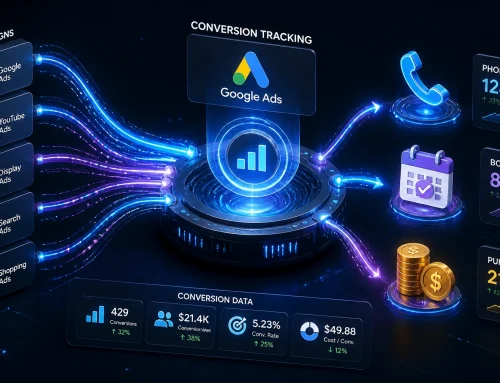
The ultimate measure of success for any digital marketing endeavor is the accuracy of its conversion tracking. Without a robust tracking mechanism, it is impossible to determine the true ROI of a campaign, leading to decisions based on incomplete or misleading data. Many businesses suffer from common mistakes in their setup, as detailed in the analysis of 7 mistakes you're making with google ads conversion tracking and how to fix them. Proper tracking must account for multiple touchpoints, including form submissions, phone calls, and even offline conversions that occur after a lead has been nurtured through a sales pipeline.
Envision Clicks emphasizes the importance of full-funnel tracking to ensure that the google ads management process is focused on revenue rather than just vanity metrics like clicks or impressions. By integrating the Google Ads platform with a CRM, advertisers can see exactly which keywords and campaigns are driving actual sales. This transparency is vital in identifying whether a google ads agency is wasting your money. High-performing campaigns are those that are constantly refined based on this conversion data, moving budget away from high-cost, low-yield terms and toward the specific queries that generate the most profit for the business.
- Set up primary conversion actions for high-value events like form completions
- Utilize call tracking to attribute phone leads back to specific keywords
- Implement the Google Tag Manager for cleaner and more reliable data collection
- Enable enhanced conversions to improve the accuracy of conversion measurement
- Audit conversion actions monthly to ensure data integrity and remove duplicates
structural campaign strategy and envision clicks experience
The final secret to Google Ads success is the implementation of a proven structural framework. Many advertisers make the mistake of over-complicating their account structure, which dilutes the data and makes optimization difficult. A consolidated structure that groups similar products or services into dedicated campaigns allows for better budget control and more effective use of automated bidding. With over 15 years of experience, Envision Clicks has developed a proven google ads management framework that prioritizes clarity, transparency, and rapid results. This framework is designed to lower the cost-per-lead within the first 30 days of implementation by stripping away the inefficiencies that plague many small business accounts.

Choosing the right partner for your advertising needs is a critical decision that impacts the long-term viability of your marketing efforts. The debate between google ads agency vs diy often comes down to the depth of technical expertise and the ability to stay ahead of platform changes. At Envision Clicks, the approach is direct: we focus on the metrics that matter to your bottom line. By leveraging our decade-plus of experience and a transparent reporting style, we ensure that you are never in the dark about how your budget is being utilized. Our goal is to transform your Google Ads account from a source of frustration into a predictable engine for business growth. For more information on how we can optimize your campaigns, visit our contact page or explore our about us section to learn more about our philosophy.
2026-03-22
Share This Article:
Related Posts:
- Is Your Google Ads Agency Wasting Your Money? 10 Red Flags to Watch For
- The Proven Google Ads Management Framework for Local Business Growth
- 7 Mistakes You're Making With Google Ads Conversion Tracking