10 Reasons Your PPC Management is Costing You Leads (And How to Fix It)
The efficacy of a digital advertising strategy is contingent upon the meticulous calibration of numerous technical variables. For local business owners and real estate professionals, the utilization of google ads management often serves as the primary driver for lead generation. However, substantial capital is frequently dissipated due to structural inefficiencies within the advertising account. When a campaign fails to yield a satisfactory return on investment, the cause is rarely the platform itself but rather the execution of the ppc management strategy. Envision Clicks has identified ten pervasive factors that contribute to lead loss and the corresponding technical remediations required to restore campaign performance.
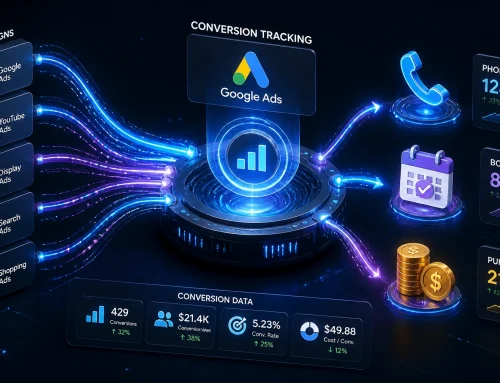
absence of granular conversion tracking
The most fundamental failure in contemporary google ads management is the lack of comprehensive conversion tracking. Many advertisers rely solely on top-level metrics such as click-through rates and impressions, which do not correlate directly with revenue or lead quality. Without the implementation of dynamic call tracking and server-side form submission monitoring, the algorithm remains incapable of identifying which specific queries result in high-value interactions. This lack of data prevents the system from optimizing for actual business outcomes.
- Use Google Tag Manager to deploy conversion tags
- Implement call-forwarding numbers to track telephone inquiries
- Integrate CRM data to monitor the entire lead-to-sale lifecycle
- Enable Enhanced Conversions to recover lost data from privacy-related browser limitations
A professional google ads agency will insist on a tracking infrastructure that captures every touchpoint. In the absence of this data, automated bidding strategies operate without the necessary feedback loops, leading to the acquisition of low-intent traffic. This scenario is particularly detrimental for local service businesses where phone calls represent the highest-intent lead source.

inefficient geographic targeting parameters
Local business advertising requires surgical precision in geographic targeting to prevent budget exhaustion on non-serviceable areas. Many campaigns are configured with overly broad radii that include locations where the business cannot realistically fulfill service requests. Furthermore, the default settings in Google Ads often include individuals who have shown interest in a location rather than those physically present within it. This nuance results in ads appearing to users who are geographically irrelevant to the advertiser.
- Restrict location settings to "Presence: People in or regularly in your targeted locations"
- Utilize ZIP code-level targeting for hyper-local precision
- Implement negative location targets for surrounding areas with low conversion history
- Adjust bid modifiers based on the proximity to the primary business location
For real estate professionals, targeting accuracy is paramount. A campaign that attracts clicks from individuals in distant states regarding local listings creates high costs without the possibility of lead conversion. Narrowing the geographic focus ensures that the ppc management efforts are concentrated on the specific market segments most likely to engage with the brand.

neglect of negative keyword maintenance
The inclusion of negative keywords is a vital component of a robust google ads for small business strategy. Without a rigorous negative keyword list, an account will inevitably bid on search terms that are superficially related but commercially irrelevant. For example, a plumbing service may inadvertently pay for clicks related to "plumbing apprenticeships" or "free plumbing advice" if these terms are not explicitly excluded. These clicks consume budget that should be reserved for high-intent queries such as "emergency plumber near me."
- Review search term reports on a weekly basis
- Create shared negative keyword lists to apply across multiple campaigns
- Identify and exclude competitor names if they produce low-quality leads
- Filter out non-commercial modifiers such as "free," "jobs," "diy," and "cheap"
At Envision Clicks, the philosophy regarding negative keywords is proactive rather than reactive. By preemptively excluding thousands of irrelevant terms based on 15+ years of industry experience, an account can achieve immediate efficiency gains. This disciplined approach to filtering ensures that every dollar of the advertising budget is directed toward searchers with genuine purchase intent.
over-reliance on broad match without constraints
Google Ads has increasingly incentivized the use of broad match keywords paired with automated bidding. While this can be effective in high-data environments, it often results in significant waste for small business accounts with limited budgets. Broad match allows the system to trigger ads for synonyms and related concepts that may deviate significantly from the intended service. In a low-volume environment, the algorithm may lack the necessary conversion signals to correctly interpret which broad variations are valuable.
- Prioritize phrase match and exact match for core service keywords
- Reserve broad match for high-volume campaigns with established conversion history
- Monitor the "Search Terms" report closely when testing broad match variations
- Implement a robust negative keyword strategy as a mandatory safeguard for broad match
Maintaining a balance between reach and relevance is a core responsibility of a competent google ads agency. By utilizing more restrictive match types, the advertiser retains greater control over the queries that trigger their advertisements. This control is essential for managing the cost-per-lead for specialized local services.

failure to implement brand protection campaigns
Many business owners assume that bidding on their own brand name is a redundant expense. However, competitors and third-party directories frequently bid on established brand names to siphon away high-intent traffic. If a business does not maintain a brand campaign, it relinquishes the top position in the search results to entities that may offer competing services or charge high referral fees. Brand campaigns typically yield the highest conversion rates and the lowest cost-per-click of any campaign type.
- Create a dedicated campaign for the business name and its variations
- Use sitelink extensions to direct users to specific service pages or contact forms
- Occupy more "above-the-fold" real estate on the search results page
- Monitor competitor activity on brand terms using Auction Insights
Protecting one's digital property is a fundamental aspect of ppc management. By securing the brand name, the advertiser ensures that existing customers and referred leads find the official website directly, rather than being diverted to a competitor. This strategy preserves the integrity of the lead generation funnel.
misalignment of ad copy and landing page intent
A disconnect between the promise made in the advertisement and the experience provided on the landing page is a primary cause of low conversion rates. If an advertisement highlights a specific promotion or service, the landing page must immediately validate that offer. Users who are forced to search through a generic homepage for the information they were promised in the ad will likely depart the site, resulting in a wasted click.
- Develop dedicated landing pages for each primary service category
- Ensure that the primary headline of the landing page mirrors the ad copy
- Minimize distractions and navigation options on lead-generation pages
- Optimize landing page load speeds to reduce bounce rates on mobile devices
The technical quality of the landing page is a significant factor in the Quality Score calculation. High Quality Scores lead to lower costs-per-click and better ad placements. Therefore, aligning the creative elements with the post-click experience is not only a matter of user experience but also a critical financial optimization.

neglecting local services ads and gbp integration
For many local service providers, the standard search results are supplemented by Local Services Ads (LSAs) and the Google Business Profile (GBP) map pack. Failing to integrate these elements into a comprehensive google ads management strategy results in reduced visibility. LSAs operate on a pay-per-lead basis rather than pay-per-click, providing a different risk profile that can be highly beneficial for businesses such as HVAC, law firms, and realtors.
- Link the Google Ads account to the Google Business Profile
- Enable location extensions to display the business address and distance in ads
- Complete the verification process for Local Services Ads to earn the "Google Guaranteed" badge
- Optimize GBP reviews and photos to enhance the performance of location-based ads
Integrating these local features allows a business to dominate multiple sections of the search results page. This multi-faceted presence increases consumer trust and provides multiple avenues for lead capture, further enhancing the effectiveness of the overall advertising spend.
"set-and-forget" management philosophy
Digital advertising environments are dynamic; competitor bids, search trends, and platform algorithms change daily. A "set-and-forget" approach to ppc management inevitably leads to performance degradation over time. Continuous optimization is required to identify emerging opportunities and mitigate new sources of waste. An account that is not reviewed and adjusted regularly will eventually succumb to rising costs and declining lead quality.
- Analyze auction insights to monitor competitor shifts
- Test new ad headlines and descriptions through responsive search ads
- Adjust bidding strategies based on day-parting and device performance data
- Review and refine audience segments for remarketing purposes
The 15+ years of experience at Envision Clicks demonstrates that the most successful campaigns are those subject to rigorous, weekly optimization. This proactive management style allows for the rapid identification of inefficiencies before they impact the bottom line. For more information on identifying mismanagement, see our guide on google ads agency red flags.
budget fragmentation across excessive campaigns
A common error in google ads for small business is the distribution of a modest budget across too many campaigns or ad groups. When the budget is spread too thin, individual campaigns fail to generate enough data for the machine learning algorithms to optimize effectively. This results in "limited by budget" warnings and inconsistent performance. A concentrated budget on a few high-performing campaigns is significantly more effective than a fragmented approach.
- Consolidate keywords into fewer, more thematic ad groups
- Focus initial spending on the most profitable services or products
- Ensure each campaign has enough daily budget to capture at least 10 clicks
- Prioritize high-intent search campaigns over experimental display or video campaigns
Concentrating resources allows for faster data accumulation and more decisive optimization. Once a core campaign has reached a stable and profitable state, the budget can then be incrementally expanded into new areas. This staged approach to scaling reduces the risk of capital loss.
lack of crm and offline conversion integration
For many businesses, the final sale or lead qualification occurs offline via phone calls or in-person consultations. If this data is not fed back into the Google Ads platform, the system remains unaware of which leads actually converted into revenue. This disconnect prevents the implementation of "Value-Based Bidding," which is the most advanced form of ppc management. Without offline conversion tracking, the account optimizes for the quantity of leads rather than the quality or value of those leads.
- Utilize GCLID (Google Click ID) tracking to map web leads to CRM entries
- Upload offline conversion data on a regular cadence
- Switch to "Target ROAS" bidding once sufficient value data is collected
- Define different conversion values for various stages of the sales funnel
Implementing this level of technical integration allows for a much more sophisticated optimization process. It enables the google ads management team to prioritize the specific keywords and audiences that drive the highest return on investment, rather than merely chasing the lowest cost-per-lead.
Envision Clicks provides professional google ads management services designed to address these technical challenges and maximize the efficiency of search advertising. By focusing on transparent reporting and precise optimization, the agency assists local businesses in transforming search traffic into measurable growth. For a detailed review of our methodology and success stories, visit our case studies or learn more about our services.
2026-05-28
Share This Article
Related Posts
- How to optimize your google ads for small business growth
- The role of an expert google ads agency in 2026
- Common pitfalls in ppc management for local service providers
{“@type”:”BlogPosting”,”image”:”https://cdn.marblism.com/eyPqQP68LbQ.webp”,”author”:{“url”:”https://www.envisionclicks.com”,”name”:”Envision Clicks”,”@type”:”Organization”},”@context”:”https://schema.org”,”headline”:”10 Reasons Your PPC Management is Costing You Leads (And How to Fix It)”,”publisher”:{“logo”:{“url”:”https://www.envisionclicks.com/logo.png”,”@type”:”ImageObject”},”name”:”Envision Clicks”,”@type”:”Organization”},”articleBody”:”The efficacy of a digital advertising strategy is contingent upon the meticulous calibration of numerous technical variables. For local business owners and real estate professionals, the utilization of google ads management often serves as the primary driver for lead generation. However, substantial capital is frequently dissipated due to structural inefficiencies within the advertising account. When a campaign fails to yield a satisfactory return on investment, the cause is rarely the platform itself but rather the execution of the ppc management strategy. Envision Clicks has identified ten pervasive factors that contribute to lead loss and the corresponding technical remediations required to restore campaign performance…”,”description”:”Technical analysis of the top 10 reasons Google Ads campaigns for small businesses fail and how to optimize for higher lead volume and ROI.”,”datePublished”:”2026-05-28″}